I offer my patients safe, effective, and predictable shoulder replacement surgery.
What is shoulder replacement?
Several different operations are labelled "shoulder replacement," so it is important to know the difference.
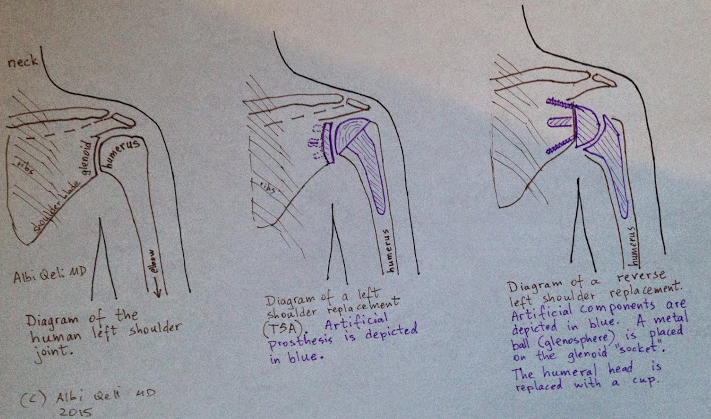
- Total shoulder arthroplasty (TSA) implies replacement of both sides of the shoulder joint, the humeral head, and the glenoid socket. Sometimes this operation is also called an anatomic shoulder replacement to contrast it with the reverse shoulder replacement.
- In reverse replacement (RSA) the ball and socket switch places. A metal ball is placed on the glenoid, and a socket replaces the ball of the humerus. It is a better type of shoulder replacement when the rotator cuff is dysfunctional, or is expected to be dysfunctional.
- Hemiarthroplasty is a partial replacement. Only the ball of the shoulder is replaced. The glenoid (the socket) is left alone. This operation provides less reliable pain relief. This operation is an option for cases when he glenoid bone stock is very poor.
- Surface replacement is a type of hemiarthroplasty (see #2 below). The difference with traditional arthroplasty is that the humeral component does not have a stem that goes down the humerus.
How is the surgery done?
As a patient, you need to know that shoulder replacement requires the use of power tools and hammers, and therefore there is some inherent risk.
I approach the shoulder joint from the deltopectoral interval, which is a proven, safe, work-horse approach to the shoulder. I then use a chisel to perform a lesser tubercle osteotomy in cases of primary shoulder replacement. I use a power saw to remove the humeral head. I use power reamers to prepare the glenoid (socket). A hammer is used to insert the artificial components.
What are the risks of shoulder replacement?
- Death. Even before surgery, the anxiety surrounding the operation may precipitate a heart attack and death. During surgery, general anesthesia may precipitate a heart attack, stroke, etc. After surgery, pain, pulmonary embolism, infections, etc., may precipitate heart attacks and death.
- Postoperative infection. When a deep prosthetic joint infection develops, this usually requires additional surgery. Treatment usually involves removal of the artificial prosthesis and administration of antibiotics for 6 weks or more. Reinsertion of a prosthesis may be done after the infection is cleared. The risk of a periprosthetic infection is approximately 1%. When treatment of periprosthetic infection fails, the shoulder prosthesis may be permanently removed. This is known as resection arthroplasty.
- In the immediate postoperative period after TSA, one must allow enough time for the subscapularis tendon to heal. In order to reach the shoulder joint during surgery, the subscapularis tendon must be detached from the humerus, and this must be then reattached at the end of the operation. It takes approximately 6 weeks for this to heal.
- Glenoid loosening remains a weak point in shoulder replacement surgery.
- Progression of rotator cuff disease. Rotator cuff diseas can coexist with glenohumeral arthritis, and progression of rotator cuff disease may cause development of pain, even after a shoulder replacement. After an anatomic shoulder replacement, progression of rotator cuff disease may need to be treated with conversion to a reverse shoulder replacement prosthesis.
- Nerve damage is possible due to the proximity of the shoulder to the brachial plexus and in particular the proximity to the axillary nerve.
What is the typical recovery after this surgery?
- Patients typically go home the same day.
- Initial rehabilitation lasts 6 weeks.
- Full rehabilitation and strengthening between weeks 6 to 12 after surgery
- Activities such as contact sports are not allowed after shoulder replacement.
Case study: regular shoulder replacement (TSA)
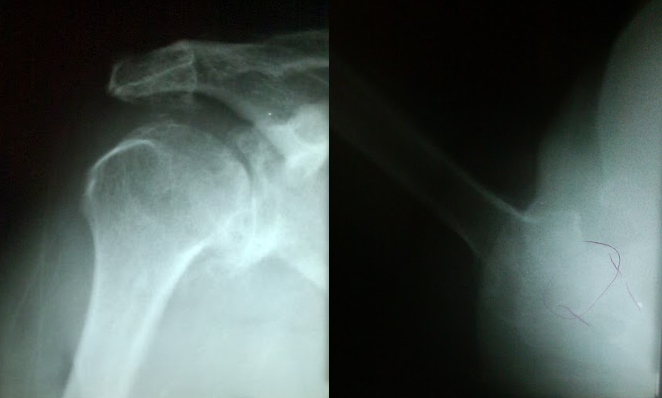
This is one of my first shoulder replacements, from 2010. 60-year old female with severe right shoulder arthritis, severe pain, stiffness, and grinding. On presentation, she was able to forward flex her shoulder only about 45 degrees, and with severe pain.
In the xrays below, note the irregular appearance of both the glenoid and humerus, the inferior ostephyte, and the degenerative cysts.
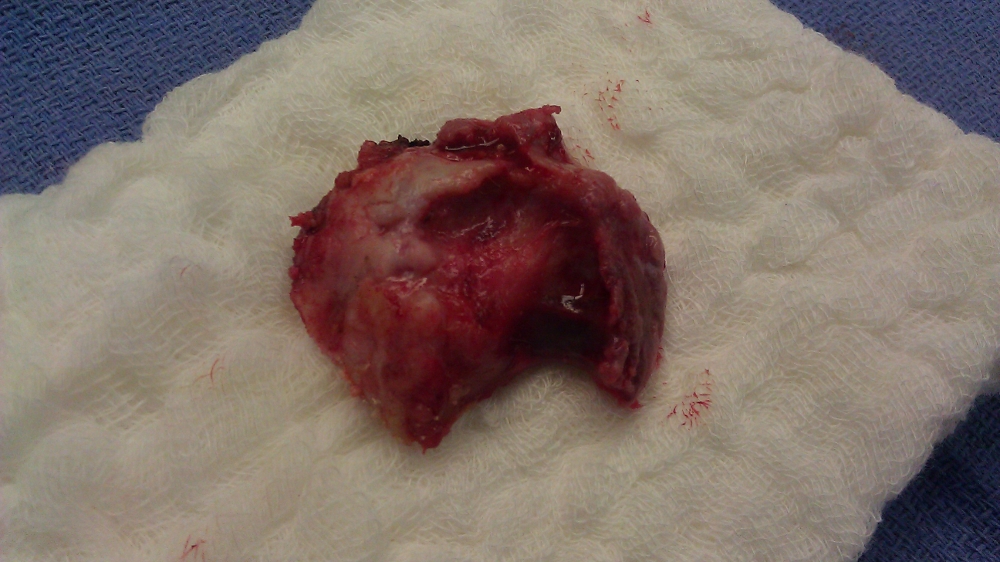
Below is a picture of the deformed head of the humerus that was removed during surgery. This was accomplished with a motorized power saw.
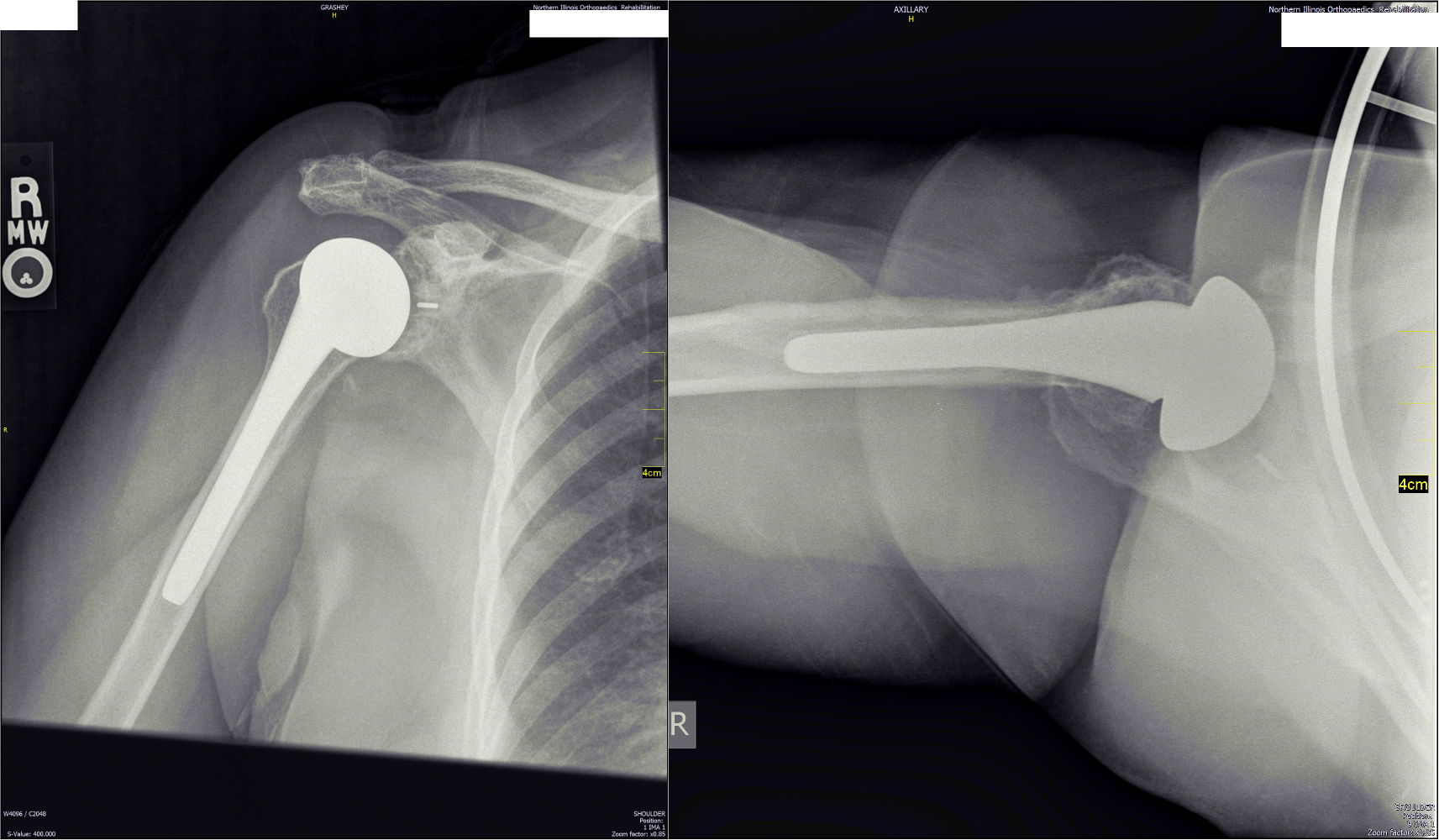
Below are xrays after surgery. This is a typical appearance of a shoulder replacement on xray. This is the same patient picture above, 3 years after her right shoulder replacement.
This prosthesis is the Exactech with a 38mm head.
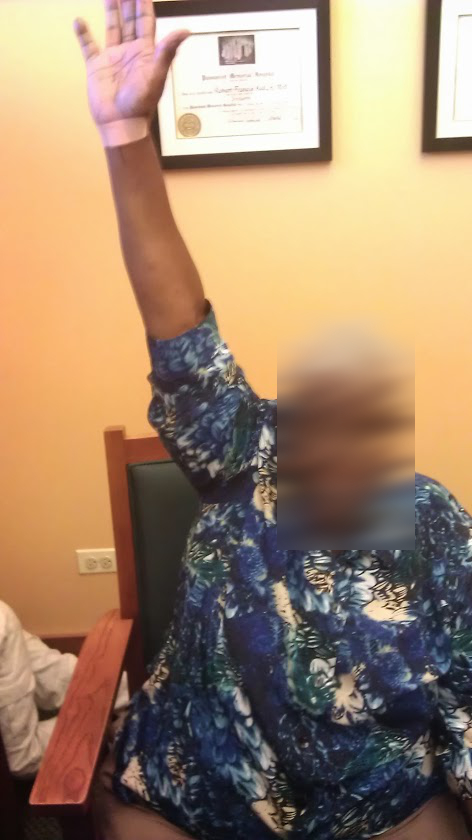
With a good repair of the subscapularis, it is possible to get full motion of the shoulder after the surgery.